

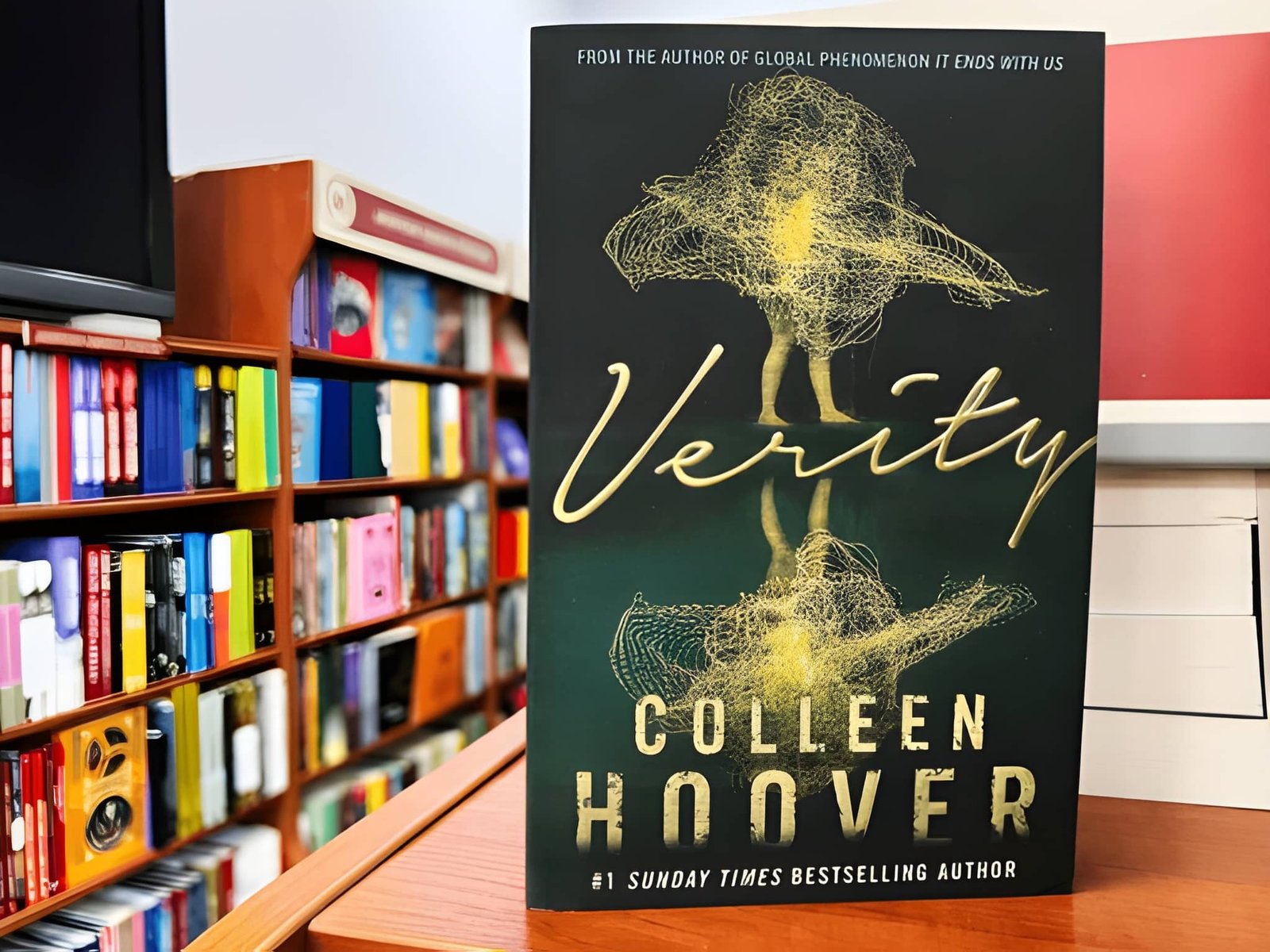
To write a book like Verity by Colleen Hoover, you need to master the unreliable narrator, build sustained psychological tension through an isolated setting, create a dual-narrative structure that constantly destabilizes the reader’s understanding of truth, blend dark romance with psychological suspense, and deliver an ambiguous ending that forces readers to choose what they believe. The engine of Verity is doubt — and every craft decision in the book is designed to deepen it.
Colleen Hoover’s Verity is one of the most discussed, debated, and compulsively reread psychological thrillers of the past decade. Originally self-published in 2018 and widely discovered through BookTok in the early 2020s, it sits in a genre intersection that most thriller writers never attempt: the dark romance thriller. It is simultaneously a love story, a gothic horror, and a psychological chess game — and the fact that it works as all three at once is a product of very specific, learnable craft decisions.
If you want to write a book like Verity, this guide breaks down exactly how Hoover built it and what you need to understand to build something equally compelling in your own original voice.
1. Master the Unreliable Narrator — Make the Reader the Detective
The most important structural decision in Verity is that the reader can never fully trust any voice in the book. The novel has two narrators: Lowen and Verity. When Lowen is the narrator, she narrates in the first person and the present tense — mostly portrayed as an everyday, relatable character, allowing the reader to imagine themselves in Lowen’s position as she struggles with increasingly disturbing ideas and challenges.
The genius of this choice is that Lowen’s reliability as a narrator is gradually, quietly dismantled. She presents herself as a moral, grounded person — but her actions increasingly mirror the very behaviour she finds monstrous in Verity. She is obsessed. She is willing to destroy evidence. She makes choices that implicate her as deeply in the story’s darkness as anyone else.
The more Lowen reads of Verity’s work, the more she begins to write, and sound like her, and even begins to behave like her. As the similarities between the two women gradually reveal themselves, the two women are actually far more similar than Lowen seems to realize. Lowen’s narration occasionally seems unreliable, as she describes Verity’s actions with horror and then performs similarly dubious acts herself.
How to build your unreliable narrator:
Give your narrator a blind spot they never fully acknowledge. Lowen’s blind spot is her own capacity for darkness — she insists throughout on her own goodness while making decisions that directly contradict it. This gap between what a narrator says about themselves and what they demonstrably do is the engine of unreliable narration.
Plant contradictions that readers may not notice on a first reading but that become visible on a second. The best psychological thrillers reward rereading — readers who return to find the clues they missed the first time become your most devoted advocates.
Never tell the reader who to believe. The moment you editorially tip the scales toward one version of events, the tension collapses. Maintain genuine ambiguity throughout and let the reader carry the weight of deciding.
2. Build the Dual-Narrative Structure That Fractures Truth
The structural masterstroke of Verity is the embedded manuscript — Verity’s secret autobiography, So Be It, which Lowen discovers in the Crawford house and reads in fragments throughout the novel. This dual narrative — Lowen’s present-day experiences and Verity’s past confessions — creates a layered and multifaceted plot that keeps readers engaged. The incorporation of Verity’s manuscript within the novel is a brilliant narrative device that adds depth and complexity to the story.
The manuscript functions as a second narrator, presenting a completely different version of the same events — one so disturbing that it reshapes how the reader understands every scene set in the present. Every time Lowen has a warm interaction with Jeremy, the reader carries the knowledge of what Verity’s manuscript claims about him. Every time Verity lies motionless in her bed, the reader wonders what she is actually thinking.
From the beginning, the complex question of truth as it relates to personal identity takes centre stage. Verity is so comfortable with deception that she spends most of the novel pretending to be brain-damaged and semi-conscious. Her actions throughout the novel are intended to gaslight and destabilise Lowen, jeopardising her position in the Crawford house.
How to build a dual-narrative structure:
Create two voices that each tell the truth as they perceive it — and make both versions internally consistent enough to be believable. The reader should be able to finish the book having accepted either version as “true.” If one version is clearly right, you’ve written a mystery. If neither is clearly right, you’ve written Verity.
Make the embedded document visually and tonally distinct from your main narrative. Verity‘s manuscript chapters feel different from Lowen’s present-tense narration — darker, more controlled, more deliberate. That tonal contrast signals to the reader that they are entering a different kind of truth.
Use the embedded narrative to recontextualise the main narrative. Every revelation in the manuscript should cast a new shadow over scenes the reader has already processed, creating a retroactive dread that makes rereading the novel feel like a completely different experience.
3. Set the Story in an Isolated, Psychologically Loaded Location
The Crawford lake house in Verity is not just a setting — it is a character. The house, laden with haunting memories and a palpable sense of foreboding, becomes a site of anxiety and trauma for Lowen. Although she is happily immersed in falling in love with Jeremy, she is also constantly uneasy as her own love story unfolds on the stage set for another woman.
Isolation is one of the most reliable tools in psychological thriller writing — and for a specific reason. When a protagonist cannot leave, cannot seek outside help, cannot verify their perceptions against the outside world, the reader is trapped with them. The isolation is not just physical; it is epistemological. Lowen cannot know what is true in this house. She cannot trust the person she is falling in love with. She cannot trust the unconscious woman in the room down the hall. She cannot even fully trust herself.
How to use setting as psychological pressure:
Choose a location that has history — ideally a history of violence, loss, or deception that predates your protagonist’s arrival. The Crawford house holds the deaths of two children, a car crash, and years of a psychologically complex marriage. Lowen steps into a space already saturated with events she doesn’t fully understand.
Make the setting physically oppressive. Closed doors, locked rooms, surveillance, strange sounds at night — these physical details of the environment translate directly into psychological unease. The reader registers these details as threat signals even before anything explicitly frightening occurs.
Use the setting to mirror the protagonist’s internal state. As Lowen becomes more enmeshed in Verity’s world, the house feels smaller and more inescapable. The external environment should track the protagonist’s psychological trajectory.
4. Weave Dark Romance Into the Thriller — Don’t Treat Them as Separate Genres
One of the things that makes Verity commercially distinctive is its refusal to let the thriller overwhelm the romance or the romance defuse the thriller. Jeremy Crawford is genuinely attractive and genuinely dangerous — and Hoover never resolves that tension cleanly. The forbidden romance adds fuel to the fire, but it’s the bone-chilling manuscript and that earth-shattering letter that cement the novel’s status.
The romance and the thriller are the same story. Lowen’s love for Jeremy is inseparable from her obsession with Verity. Her desire to replace Verity in Jeremy’s life is exactly what makes her vulnerable to the very manipulation Verity is running. She cannot have the romance without engaging with the darkness, and the darker the story gets, the more deeply she falls.
How to blend dark romance and psychological suspense:
Make the romantic interest morally compromised. Jeremy is not a safe harbour — he is part of the threat. A love interest who is simply kind and good in a thriller is a structural weakness. The romantic pull should be entangled with the danger.
Use the romantic relationship to raise the stakes of the thriller. What Lowen discovers about Verity matters more because she loves Jeremy; what Jeremy may or may not have done matters more because she loves him. Romantic investment amplifies thriller tension — use that mechanism deliberately.
Let the protagonist’s desire blind them in ways the reader can see. Lowen’s growing attachment to Jeremy consistently affects her judgment in ways that serve the plot’s momentum. Desire is one of the most powerful sources of narrative tension because it is inherently irrational.
5. Deliver an Ending That Refuses to Resolve
The ending doesn’t offer comfort — it offers devastating ambiguity that forces readers to confront uncomfortable questions about love, guilt, and the stories we tell themselves to survive. Long after you close the book, Verity’s question lingers: which truth will you choose to believe?
The final pages of Verity introduce Verity’s letter — a document that recontextualises everything the reader has spent the entire novel accepting as true. The manuscript may have been fiction. Verity may have been innocent. Jeremy may have been the true villain from the beginning. Or Verity may be lying again, running her manipulation from beyond the grave. It is left unclear to the reader whether the letter or the autobiography is truthful.
Hoover does not tell the reader which version to believe. That refusal is the book’s most audacious craft decision — and its most commercially successful one. The ambiguous ending is what drives readers to seek out other readers, to argue online, to reread, looking for proof. It transforms a reading experience into a social one.
How to write an ambiguous ending:
Make both resolutions equally supported by the text. If one ending is clearly right, the ambiguity is false. Genuine ambiguity means the evidence genuinely supports more than one conclusion — and readers with different reading instincts and different life experiences will land differently.
End on a question, not an answer. The final image of Verity — Lowen destroying Verity’s letter rather than showing it to Jeremy — is not a resolution. It is a choice that implicates Lowen in the story’s moral darkness regardless of which version of events is true. She has chosen the version of the story she wants to live inside. That choice says everything about who she has become.
Summary: Key Elements of Writing a Book Like Verity
| Element | What To Do |
|---|---|
| Unreliable narrator | Give them a blind spot, plant contradictions, never tip the scales |
| Dual-narrative structure | Two voices, each internally consistent, each undermining the other |
| Setting | Isolated, historically loaded, psychologically oppressive |
| Dark romance | Entangle desire with danger, let love blind your protagonist |
| Ambiguous ending | Support two conclusions equally, end on a choice, not an answer |
| Pacing | Short punchy chapters, constant micro-revelations, relentless forward momentum |
Writing a book like Verity means building a story where the reader cannot fully trust anything they’re told — and where that sustained uncertainty creates an almost physical compulsion to keep reading. The craft is not in the darkness itself. It is in the architecture of doubt. Build that architecture with care, and readers will be arguing about your ending long after they’ve finished the last page.
Frequently Asked Questions
What genre is Verity by Colleen Hoover?
Verity is a dark romance psychological thriller — a genre hybrid that combines the emotional intensity and romantic tension of dark romance with the unreliable narration, mystery, and sustained dread of psychological suspense fiction.
What makes Verity so addictive to read?
The novel’s addictiveness comes from its dual-narrative structure, its relentless ambiguity about what is true, its morally compromised protagonist, and an ending that refuses to resolve the central question — forcing readers to debate, reread, and make their own choice about which version of events they believe.
Is Verity appropriate for all audiences?
No. Verity contains explicit sexual content, graphic violence, and deeply disturbing psychological content. It is written for adult readers.
